Live sport is one of the most powerful entertainment experiences in the world. But delivering a great ‘game day’ experience is more than just what happens on the court or field of play.
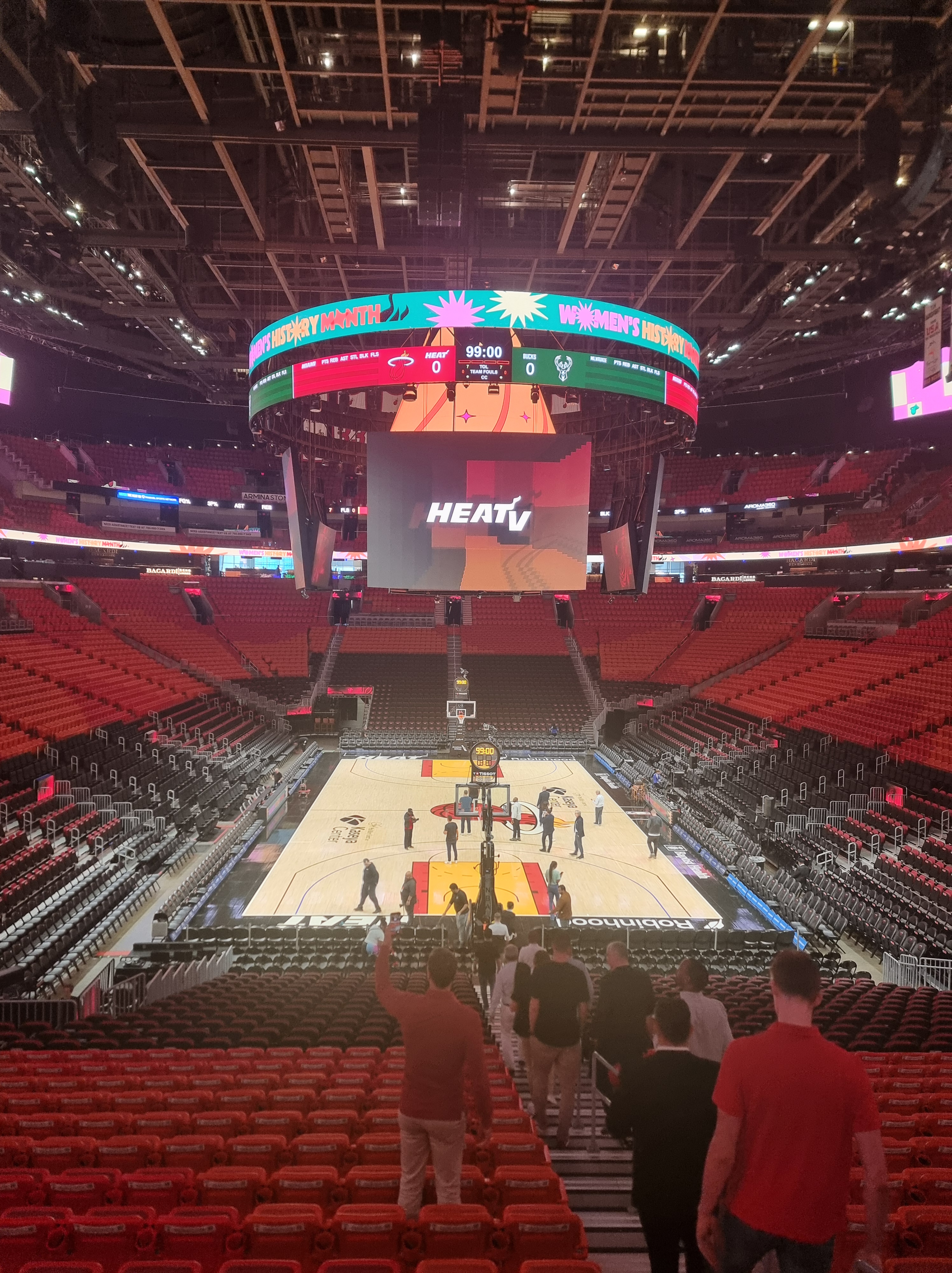
During a recent visit to the home arena of the Miami Heat, Kaseya Center, I conducted a simple observational analysis of the fan experience from arrival through to departure.
The venue showcased a number of strong engagement, along with some useful lessons about crowd flow, retail design and sensory balance. For sports clubs, leagues and venue operators, there is plenty to learn.
- A Smooth Start: Getting Fans Into the Building
One of the first things that stood out was how quickly fans moved through security. Efficient security screening is critical because long queues before entry can immediately damage the fan mood.
Once inside, fans were greeted by a vibrant fan zone atmosphere, featuring food, drinks, a stage with live music and entertainment for children. This transformed arrival time into part of the overall event rather than simply waiting for the game to begin.
Another strong feature was the opportunity for fans to watch players warming up before the game. This unique ‘wow’ moment can create a genuine emotional connection for fans.
Key takeaway
Arrival should feel like the start of the event, not just an operational step. Make sure you have things going on pre game for the fans to sample and enjoy.
- Food Variety
The arena offered a range of food options.
Modern fans expect choice and convenience and the variety on offer delivered well in this respect.
However, the layout created an issue. A significant number of food vendors were concentrated in one concourse area, making it noticeably busier than others. This led to heavy congestion and bottlenecks in that section of the arena.
Key takeaway
Food variety is important but distribution of outlets across the venue must be taken into consideration.
Sports organisations should ensure food outlets are spread around the venue in order to keep the crowd flow balanced.
- Sponsorship That Engages Fans
A strong example of sponsorship activation was visible in the concourse where a car sponsor display allowed fans to interact with the vehicle.
This type of activation works well because it:
- Creates a visual focal point
- Encourages interaction
- Enables valuable fan data capture
Rather than simply placing logos around the building, the activation turned sponsorship into a fan experience moment.
Key takeaway
Make sure sponsors are involved in enhancing the fan experience at the venue. This should be more than simple product placement. Authentic engagement is key.
- Treating Fans as Guests
One subtle but important detail was the presence of a “Guest Experience” help desk.
The language matters. Calling visitors “guests” reinforces a hospitality mindset among staff.
This culture was reinforced by several other observations:
- Cleaners actively maintaining the toilets and concourse areas
- Friendly stewards thanking fans as they left
- Staff promoting special merchandise offers in store
These interactions contribute significantly to how people perceive the brand.
Key takeaway
Fan experience is not only about entertainment. It also expends to how people are treated by the staff and volunteers.
- Smart Use of Technology
Several technological features enhanced the in-game experience.
Fans could scan a QR code on the jumbo screen to join a stadium light show, turning their phones into part of the visual spectacle. The arena also used a sound meter on the big screen, encouraging fans to compete to generate the loudest noise.
These features successfully turned spectators into active participants in the show.
Another practical addition was phone charging stations located around the concourse, ensuring fans could stay connected throughout the event.
Key takeaway
Ensure fans are actively part of the overall event experience through the use of technology.
- Entertainment That Moves Through the Crowd
The venue delivered strong crowd engagement through a mix of live entertainment.
A marching band moving through the concourse created a festival atmosphere before the game, while the MC played an important role energising the audience and prompting applause after announcements.
The team mascot also moved through the stands interacting with fans, banging saucepans and waving signs. These roaming interactions help maintain energy even when the game pauses.
Key takeaway
Entertain and surprise your guests.
- Retail: When Success Creates Pressure
The team shop was extremely busy. A positive sign of strong demand for merchandise.
However, parts of the store felt tight and overcrowded, which made browsing difficult and reduced comfort for fans.
Retail spaces in modern arenas need to be designed for peak demand, not average demand.
Key takeaway
High demand is great, but the retail environment must still feel comfortable and enjoyable.
Pop-up merchandise stands throughout the arena could help relieve pressure from the main store.
- The Power of Unique Fan Moments
One of the most memorable elements of the evening came after the game finished.
Fans were given the opportunity to step onto the court and attempt a free throw.
Moments like this are incredibly powerful because they allow fans to physically connect with the venue and the sport.
Experiences that place fans on the playing surface often become lifelong memories.
Key takeaway
Consider high value but low costs experiences to help create a memorable moment
- When Engagement Becomes Overwhelming
One interesting observation was the sheer volume of activity happening simultaneously.
Between music, announcements, mascot appearances, competitions and interactive features, there were moments when the environment felt close to sensory overload.
While energy is important, fans also need moments to simply watch and absorb the game.
Key takeaway
Fan engagement should enhance the game, not compete with it.
- Managing Crowd Flow
The biggest operational challenge appeared to be crowd movement through the concourses.
Because many food vendors were concentrated in one area, the flow of people became uneven and congested. This is often a challenge in older arena designs where concourse layouts were not built for modern entertainment demand.
Improving distribution of vendors or using signage to direct fans to quieter areas could help reduce these bottlenecks.
Key takeaway
Manage the flow of people on a game day. Experience the game from the fans perspective and see where the bottlenecks are.
- Leaving the Venue
The exit process was smooth overall, though it could benefit from more stewards guiding the flow of fans.
The final moment of the experience still mattered. A steward offering a smile and thanking visitors for coming created a positive last impression.
The exit experience should never be overlooked. It is the final emotional touchpoint of the event.
Key takeaway
Train your staff and volunteers to say goodbye (do it with ‘meaning’ and a smile)
______________________________________________________________________________
Key Lessons for Sports Organisations
This visit to the Miami Heat arena highlighted several important principles for modern sports venues.
1. Make arrival part of the entertainment
Fan zones, live music and warm-up access build anticipation.
2. Spread food outlets across the venue
Poor distribution creates congestion and frustration.
3. Activate sponsors through experiences
Interactive activations generate engagement and data.
4. Treat fans like guests
Hospitality culture strengthens brand of the event organiser.
5. Design retail for peak demand
Crowded stores damage the purchasing experience.
6. Balance energy with breathing space
Too much stimulation can overwhelm fans.
7. Never ignore the exit experience
The last moment fans remember should be positive.
About Geoff Wilson
Geoff runs his own consultancy business, with a focus primarily on sport. Previously Head of Marketing and Communications at the Irish FA, Geoff now consults to a wide range of global sports organisations on areas such as strategic planning, marketing and communications, digital, fan engagement, public affairs, women’s football, league development, club development and knowledge sharing / capacity building programmes. Geoff has created numerous academic models for the sports industry. Geoff is on the Advisory Panel at the English Football League and Chair of the Sports Council Trust Company (Sport England organisation).
Geoff has written a book which focuses on ‘developing grassroots sports clubs’ to order a copy check out:
The sports models created or co created by Geoff can be found below:
- Fan engagement https://geoffwnjwilson.com/2016/08/25/254/
- Fans Journey Model https://geoffwnjwilson.com/2023/04/06/the-fan-journey-model/
- Club Development framework model https://geoffwnjwilson.com/2024/01/30/club-development-framework-model-for-the-sports-industry/
- Growing attendance https://geoffwnjwilson.com/2019/09/18/growing-attendance-model-gam/
- Data maturity on sport https://geoffwnjwilson.com/2021/05/29/61-of-all-sports-organisations-do-not-use-data-for-their-overall-strategy/
- Sports Community Engagement Model https://geoffwnjwilson.com/2024/08/22/sports-community-engagement-model/
 The Business of Sport