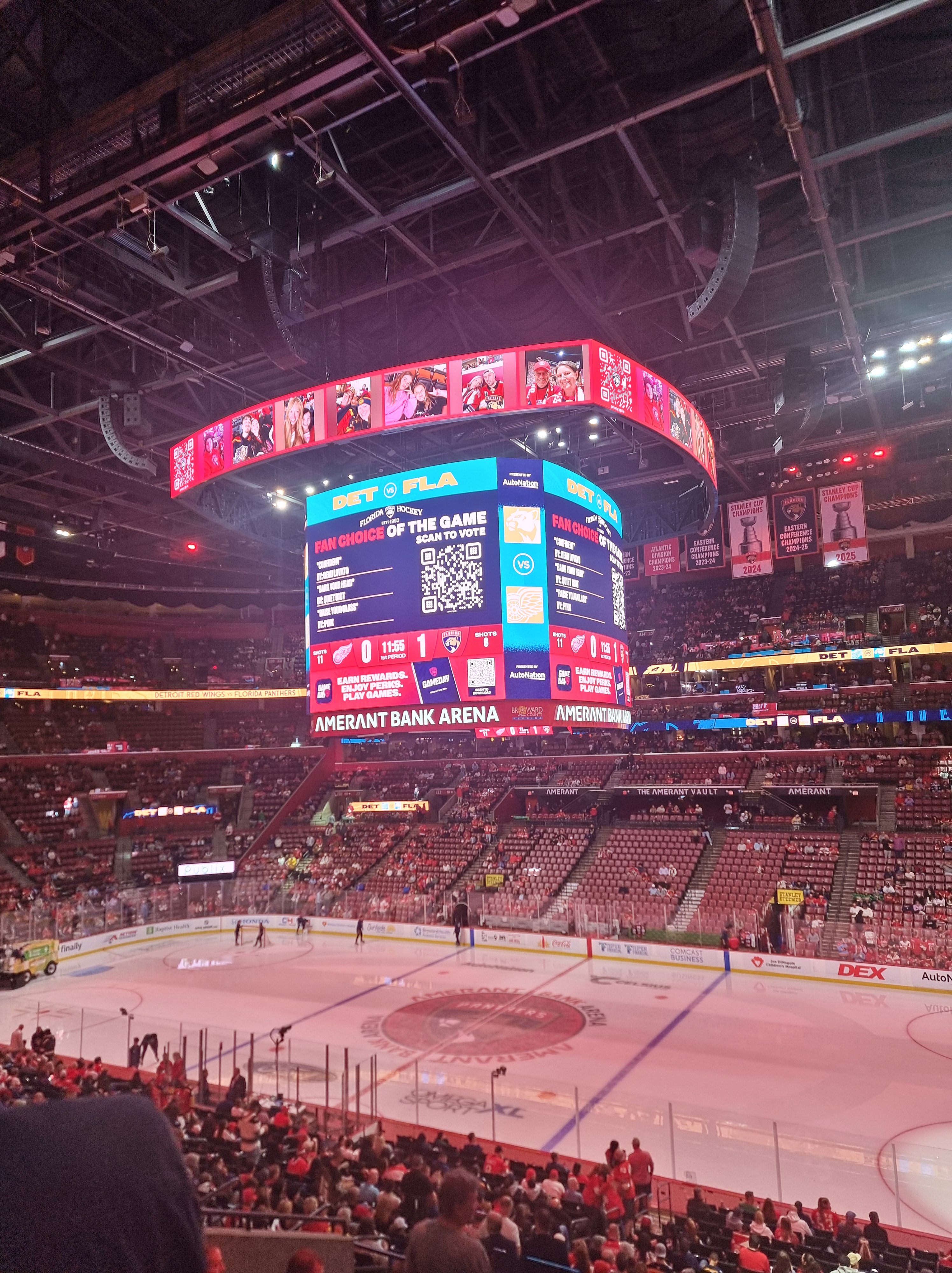
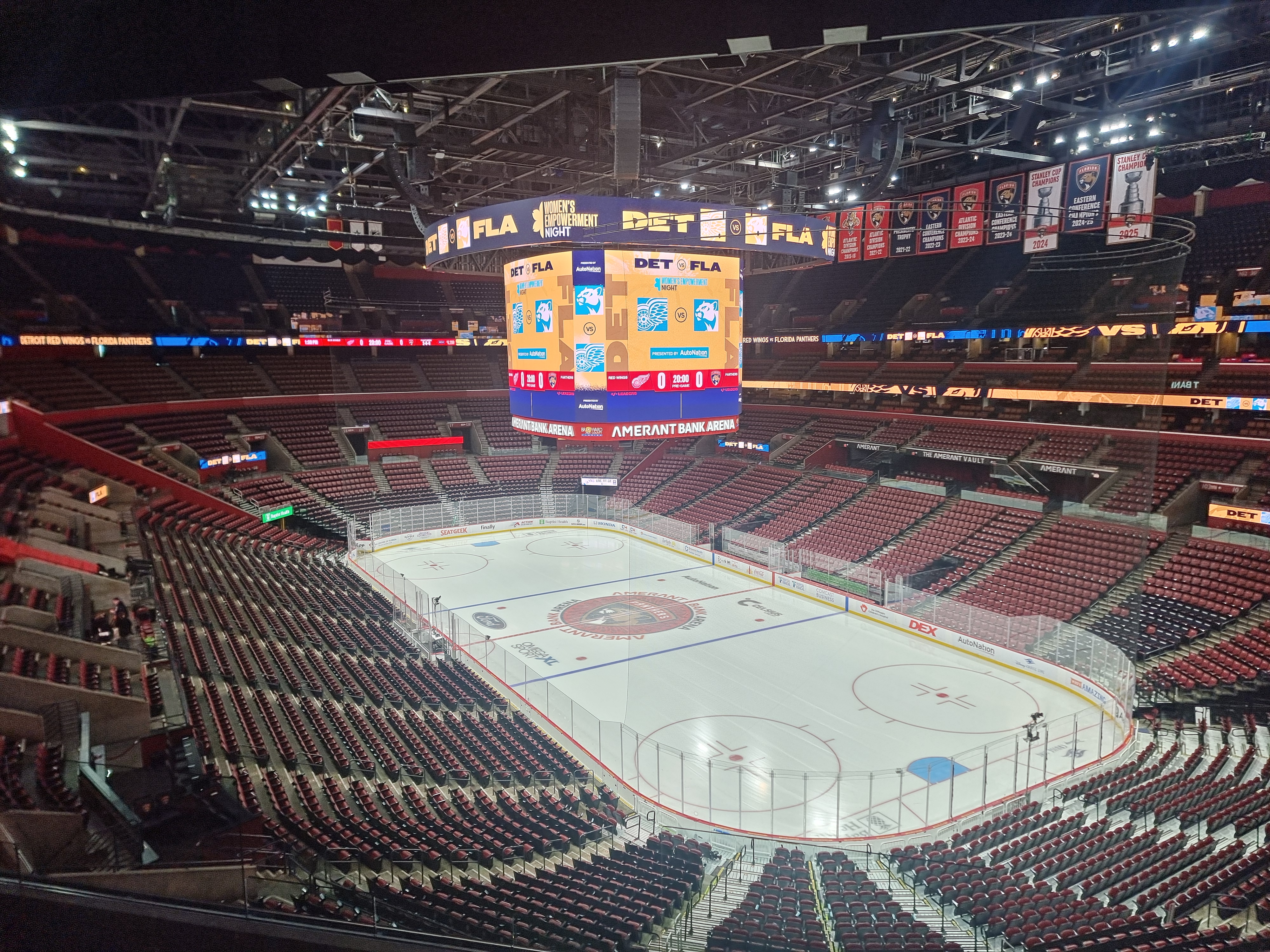
Visiting a live sporting event is one of the best ways to understand what truly drives fan engagement. Recently, I attended a game at the home of the Florida Panthers, Amerant Bank Arena, with the specific goal of observing the fan experience through a sports marketing lens.
The evening revealed several strong operational and commercial practices along with a few areas where the experience could be improved. For sports organisations, clubs and leagues looking to enhance their own fan journeys, there are valuable lessons to take away.
Below is a breakdown of what worked well and what could be improved.
- First Impressions
One of the most overlooked elements of fan experience is arrival and entry. The Panthers delivered this well.
Parking attendants were visible, helpful and efficient, directing traffic pre game. This immediately reduced stress for fans arriving by car. Good parking management is a small detail, but it shapes an extremely important touchpoint at a sporting event.
Leaving the venue was equally impressive. Staff stood outside waving cars through and managing traffic flow, making the post-game exit smooth and quick.
Lesson:
Managing traffic and the flow of people reduces friction and sets a positive tone before fans even reach their seats.
Recommendations for other sports organisations
- Make sure you have adequate number of branded staff and/or volunteers managing the parking and traffic areas. Recruit and train ‘parking and traffic’ teams as frontline customer service staff.
- Ensure clear wayfinding and fast exit routes
- Treat arrival and departure as part of the entertainment experience
- Smart Concourse Design Drives Spending
One of the strongest elements inside the arena was the concourse layout and retail strategy.
Food outlets were easy to reach from the stands and queues were short. Importantly, the food offer was varied and culturally diverse: BBQ, pasta and other quick-service options from smaller mobile food units placed strategically around the venue.
This approach achieved two things:
- Reduced wait times
- Increased variety and impulse purchases
The arena also used pop-up merchandise outlets throughout the building. High-value items such as signed jerseys, practice jerseys and goalie pads were prominently displayed and positioned at a higher price to the normal merchandise in the fan shop.
This is a clever strategy. Premium memorabilia sells best when fans are emotionally engaged with the brand.
Lesson:
Food and retail outlets should be distributed around the venue, visible and seek to offer variety of options with different price points and tastes.
Recommendations for other sports organisations
- Use mobile or pop-up food & merchandise stands strategically placed around the venue
- Offer both impulse items and premium collectibles
- Place outlets along high-traffic routes at the venue
- Technology That Removes Friction
The Panthers arena showcased several technologies that significantly improve the purchasing experience.
The venue operates fully cashless payments, which speeds up transactions. Even more impressive was the use of walk-in walk-out stores, where cameras automatically track products like drinks or sweets and charge fans without a checkout.
This reduces queues dramatically and allows the venue to serve massive crowds quickly.
Another clever feature was the use of the big screen to promote app downloads via QR codes, combining entertainment with digital interaction.
Lesson:
Technology should make spending easier and faster. Don’t focus on the technology rather identify the process and pain points first then how tech can solve these issues.
Recommendation for other sports organisations
- Introduce cashless payments where possible
- Use stadium screens to drive digital engagement
- Link in-venue entertainment with mobile platforms
- Fan Engagement Inside the Bowl
The Panthers use several entertainment tools to keep fans involved throughout the game.
Highlights included:
- A mascot roaming the stadium with drums, interacting with fans
- A dance team performing on stage
- Big screen engagement prompts encouraging fans to shout and clap
- 50:50 raffles and other prize draws
- Selfie stations around the arena
These tactics help create small moments of excitement between game stoppages.
The arena also had a nice touch for newcomers: a first game badge, which helps build emotional connection and memory-making.
Lesson:
Fan experience is built pre, during the game (and at breaks in play) and after the game.
Recommendation for other sports organisations
- Create roaming entertainment assets (mascots, musicians, fan hosts)
- Recognise first-time visitors
- Design multiple photo opportunities inside the venue
- Sponsorship Integration Done Well
A subtle but effective commercial strategy was the branding of every toilet area by a sponsor.
While restrooms are rarely glamorous sponsorship assets, they are among the most visited spaces in a stadium.
This kind of integration ensures sponsor visibility without disrupting the fan experience.
Lesson:
High-traffic functional areas can become valuable sponsorship inventory.
Recommendation for other sporting organisations
- Use all possible locations to apply relevant and suitable sponsorship branding.
- Customer Service Still Makes the Biggest Difference
One of the most memorable moments came from a security staff member.
When fans accidentally bumped into others in the aisle, the staff member handled it politely and with warmth. That small interaction created a positive feeling around the section.
Fan experience is often defined by how people are treated, not just by technology or entertainment.
Lesson:
Staff attitude is one of the most powerful brand ambassadors a club has.
Recommendation for clubs
- Train staff and stewards in customer service. Be welcoming and never aggressive to the fans
Areas that could be improved
Despite many strengths, several areas of the experience could be enhanced:
- Atmosphere
The crowd atmosphere was relatively quiet. There were few coordinated chants or fan songs, which limited the energy inside the arena.
This often happens when culture is not actively cultivated or led by the fans.
2. Game Presentation
There was no clear MC guiding the experience and the PA system was not clear. Therefore, many announcements were missed.
An MC can connect segments of entertainment, build anticipation and drive crowd participation.
3. Facilities
Queues for the male restrooms were noticeable, suggesting capacity or layout issues. I actually have never seen as big a queue for the men’s toilets as there was at the Panthers stadium!
4. Post-Game Engagement
While exiting the venue was efficient, there was no thank-you message or ‘goodbye team’ when leaving the venue.
This is a missed ‘personal touch’ opportunity.
Key Takeaways for a Sports Organisations
The visit reinforced several important principles in modern stadium experience design:
1. Reduce friction everywhere
- Parking
- Food access
- Fast Payments
- Entrance and Exit routes
2. Maximise in-venue spending opportunities
- Distributed retail
- Range of Food and Beverages on offer
- Premium memorabilia
- Fast transactions
3. Design engagement moments constantly
- Mascots
- Screen games
- Photo stations
- Raffles
4. Train staff as experience ambassadors
A friendly staff member can influence a fan’s perception of the entire event.
5. Never neglect atmosphere
Clubs should actively develop fan songs, supporter culture and in-game leadership.
6. Always think fans first approach
7. Ensure you clearly communicate the values of your sports organisation. People will be attracted organisations who hold to the same values as them
About Geoff Wilson
Geoff runs his own consultancy business, with a focus primarily on sport. Previously Head of Marketing and Communications at the Irish FA, Geoff now consults to a wide range of global sports organisations on areas such as strategic planning, marketing and communications, digital, fan engagement, public affairs, women’s football, league development, club development and knowledge sharing / capacity building programmes. Geoff has created numerous academic models for the sports industry. Geoff is on the Advisory Panel at the English Football League and Chair of the Sports Council Trust Company (Sport England organisation).
Geoff has written a book which focuses on ‘developing grassroots sports clubs’ to order a copy check out:
The sports models created or co created by Geoff can be found below:
- Fan engagement https://geoffwnjwilson.com/2016/08/25/254/
- Fans Journey Model https://geoffwnjwilson.com/2023/04/06/the-fan-journey-model/
- Club Development framework model https://geoffwnjwilson.com/2024/01/30/club-development-framework-model-for-the-sports-industry/
- Growing attendance https://geoffwnjwilson.com/2019/09/18/growing-attendance-model-gam/
- Data maturity on sport https://geoffwnjwilson.com/2021/05/29/61-of-all-sports-organisations-do-not-use-data-for-their-overall-strategy/
- Sports Community Engagement Model https://geoffwnjwilson.com/2024/08/22/sports-community-engagement-model/

