
Sport is no longer competing only with other sports; it is competing for people’s time, attention and entertainment choices. It is competing with Netflix, gaming, concerts, restaurants and staying at home. That means every gameday must become an experience: not simply a fixture.
In an age where fans can choose how and where to spend their money and time, delivering a memorable game day experience is no longer optional. It’s essential. I helped develop the Fan Journey Model along with good friends, Mark Bradley and Darren Young, to unpack what truly makes fans say “wow” and come back for more.
Great fan journeys are not only about atmosphere. They influence attendance retention, sponsor value, merchandise sales, digital engagement and long-term community loyalty.
Whether you’re running a grassroots club or a professional sports organization, here are some practical thoughts to elevate the fan journey.
1. Start Before the Whistle: Pre-Game Awareness and Ease
The fan experience begins long before the gates open. From the moment a game is announced, clubs should think: Is it easy to know the game is on? Is buying a ticket fast and simple? Are fans getting the right info; when to arrive, how to get there, what’s happening?
Digital Matters: Depending on the size of your sports organisation, this may include: Mobile ticketing, push notifications on your app, personalised offers, high-quality matchday content which is led by great storytelling, fan data collection and loyalty and reward programs.
Make your content clear and engaging. The more friction you remove before game day, the better.
2. Game Day Magic: Touchpoints That Wow
From parking to stewarding, fans are forming opinions the moment they approach your venue. That means:
- Smooth parking systems with clear signage and friendly stewards
- Clean venues, including restrooms and seating areas
- Welcoming staff to guide and engage
- Varied food and beverage options that go beyond “just ok”
- Merchandise and entertainment zones to set the atmosphere (and I don’t mean play loud music over a poor PA system!!)
3. Engagement that Goes Beyond the Game
Today’s fan isn’t just a spectator. They want to be part of the story. Use breaks in the game wisely with relevant performances or crowd competitions that fit your club’s identity.
4. Seamless Departures
A chaotic exit can undo a great experience. Keep it smooth:
- Open all gates, not just a few
- Use signs and staff to guide fans in one direction
- Work with transport providers to boost service after full time
- Consider a “goodbye team” to leave fans with a smile (and maybe a sponsor’s promotional offer)
5. Keep the Connection Alive: Post-Game Strategy
The game may be over, but the fan experience isn’t. Stay connected via:
- Post-match interviews and highlights on social
- Behind-the-scenes content on social
- Feedback surveys via email (to gauge the game day experience and how it can be improved)
- Community events and player Q&As
The goal? Build a relationship that lasts beyond the game.
Remember, the best fan experiences create: belonging, identity, memories and emotional connection which are all linked to the tradition, values, history and future vision of the sports organisation. Fans may forget the score after a few weeks, but they rarely forget how your club made them feel.
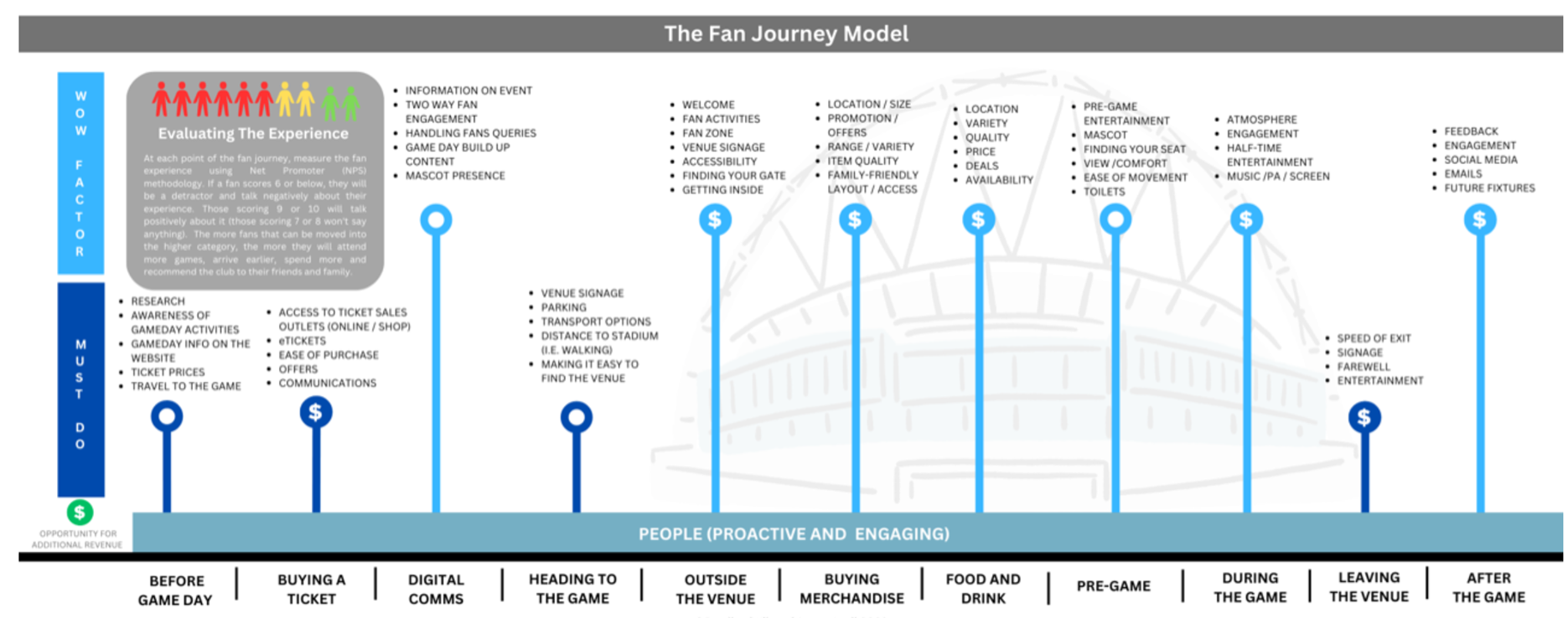
6. Use the Fan Journey Model: Audit, Adapt, Improve
The Fan Journey Model is a tool any club can use to map every touchpoint, identify pain points and find quick wins. Feel free to amend the touchpoints or the areas you want to grade.
Start with a small group of fans and staff (10-15 individuals). Rate each area. Discuss what’s working and what’s not. Then build a plan and track improvements over time.
Every Touchpoint Shapes Perception. This might include: Social media response times, ease of website navigation, staff attitudes and behaviours to fans, queue times, cleanliness, the atmosphere on game day, a welcoming inclusive and fan-friendly environment.
Because fans judge the club brand through every interaction.
Conducting an audit of the fan journey is not a one-time checklist. It’s a culture of listening and leveling up.
Final Thought
A great fan journey doesn’t happen by chance. It takes planning, feedback and a willingness to see things through the fan’s eyes. From parking lots to post-match posts, every detail matters.
The key question for every sports organisation is simple:
Are you simply hosting and organising games or intentionally designing experiences people want to return to time and time again?
About Geoff Wilson
Geoff runs his own consultancy business, with a focus primarily on sport. Previously Head of Marketing and Communications at the Irish FA, Geoff now consults to a wide range of global sports organisations on areas such as strategic planning, marketing and communications, digital, fan engagement, public affairs, women’s football, league development, club development and knowledge sharing / capacity building programmes. Geoff has created numerous academic models for the sports industry. Geoff is on the Advisory Panel at the English Football League and Chair of the Sports Council Trust Company (Sport England organisation).
Geoff has written a book which focuses on ‘developing grassroots sports clubs’ to order a copy check out https://www.routledge.com/Leading-a-Grassroots-Sports-Club-A-Practical-Guide-to-Managing-and-Developing-Your-Club/Wilson/p/book/9781041094883?srsltid=AfmBOooMPgFpXYSGYwNBOLxrR6mYShU8mWeM_rbVCGlipdpjnsfqlqVD
Further Resources section
Check out Geoff’s online course in strategic planning at https://geoffwilson.teachable.com/
The other sports models created or co created by Geoff can be found below:
- Fan engagement https://geoffwnjwilson.com/2016/08/25/254/
- Fans Journey Model https://geoffwnjwilson.com/2023/04/06/the-fan-journey-model/
- Club Development framework model https://geoffwnjwilson.com/2024/01/30/club-development-framework-model-for-the-sports-industry/
- Growing attendance https://geoffwnjwilson.com/2019/09/18/growing-attendance-model-gam/
- Data maturity on sport https://geoffwnjwilson.com/2021/05/29/61-of-all-sports-organisations-do-not-use-data-for-their-overall-strategy/
- Sports Community Engagement Model https://geoffwnjwilson.com/2024/08/22/sports-community-engagement-model/
 The Business of Sport