Grassroots sport has always had a special place in my heart.
It is where the first memories of the game are made. It is where parents stand on touchlines in the rain, snow and sunshine. Where grandparents ask for the score before the match has even finished. Where players remember their first goal. Where volunteers give up evenings and weekends. Where clubs become part of the social fabric of a town, village or local community.
And yet, apart from posts on social media, grassroots sport is often almost invisible.
Most digital attention in sport still goes to the professional game. That is understandable. Elite sport has the broadcasters, the big clubs, the major sponsors, the famous players and the global audiences. But it also means that the level of sport with the deepest local connection is often the level with the weakest digital infrastructure.
That needs to change.
Families, players, coaches, volunteers and communities want content on their local club. They want fixtures, results, photos, video clips, team updates, player stories, match moments and simple ways to feel connected to their football community. The demand is already there. In many cases, the content is already being created every weekend by parents, coaches, clubs and volunteers through posts on social media.
The problem is that much of this content is being published on third-party platforms.
Platforms such as Facebook groups. WhatsApp chats. Club social media accounts. Personal social media accounts.
These platforms can be useful. They are familiar and easy to use. But if a federation or league relies on them completely, it does not really own its digital audience. It is renting attention. It is allowing someone else to control the relationship with its own community.
For CEOs of sports leagues and federations, this is no longer just a communications issue. It is a strategic issue.
If you do not know who is following your grassroots game, how they engage, what content they value and how they connect with clubs and competitions, then you are missing a major opportunity. You are also missing the opportunity to commercialise this digital content.
A proper digital ecosystem gives a federation or league the ability to bring the grassroots game into one connected space. It gives visibility to matches that would never make mainstream media. It allows families and fans to follow teams, receive updates and engage with content that matters to them. It gives sponsors a more meaningful way to connect with real communities. It gives the governing body direct access to its audience and better insight into participation and engagement.
Recently I came across an interesting concept from a Swedish company called Sportswik. They have an interesting model that grassroots leagues and governing bodies should consider.
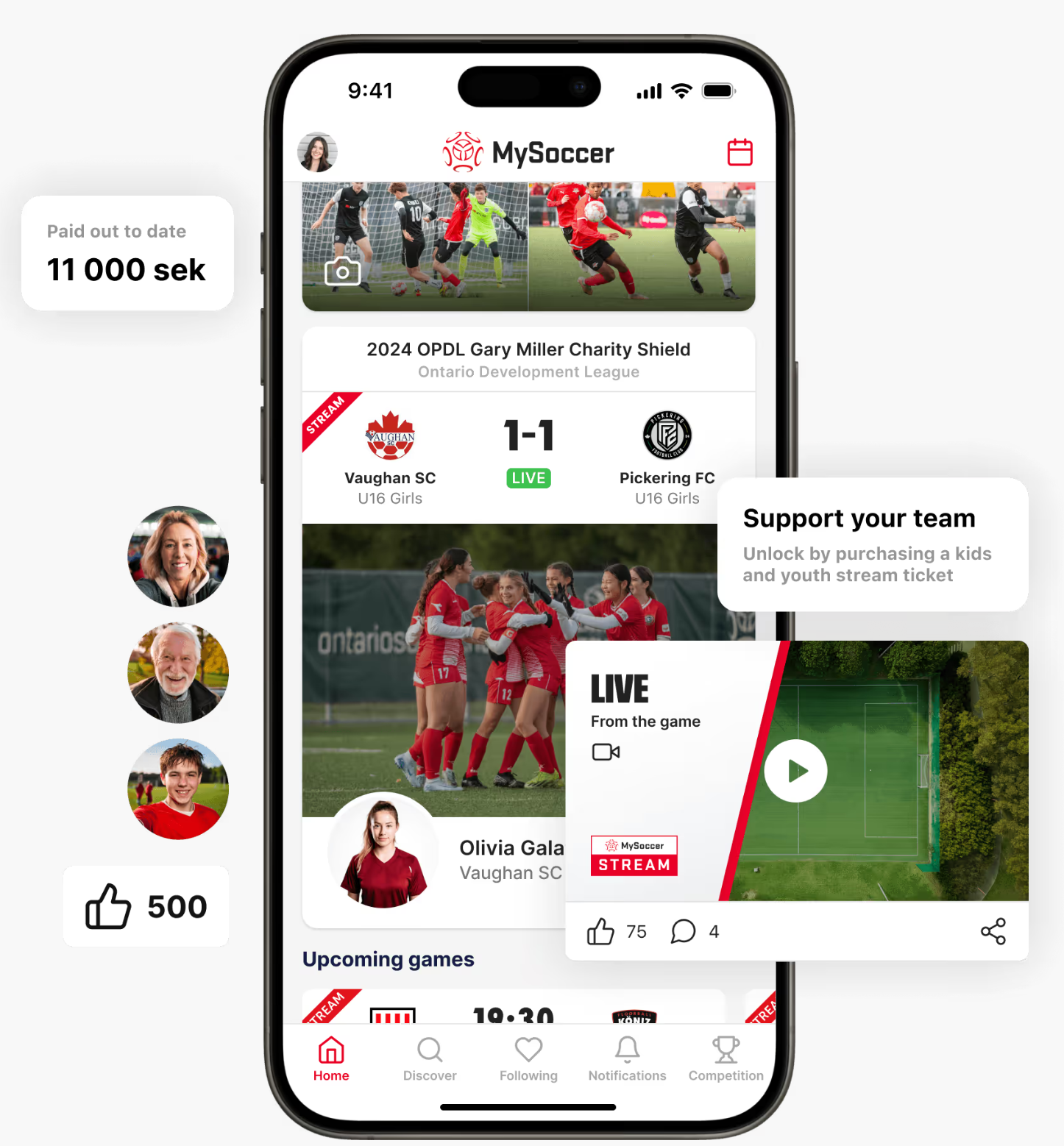
The platform is not simply trying to replicate elite sport media. It is focused on helping federations, leagues and grassroots communities create a digital home for the everyday game. Its work with the Swedish FA through Min Fotboll and Ontario Soccer through MySoccer shows how grassroots sport can be organised and shared in a way that gives local matches and local participants greater visibility.
That matters because grassroots sport does not need to become professional sport. It needs a digital model that reflects its own strengths.
Those strengths are community, participation, family connection, local identity and emotional attachment. A parent may care more about a ten-second clip of their child scoring than a highlight from a major professional fixture. A local club volunteer may care more about seeing their team recognised than reading another story about a global star. A sponsor may value authentic community reach more than passive logo exposure.
Sportswik is interesting because it recognises that this content already exists. The challenge is not always content creation. The challenge is organisation, ownership and distribution.
For federations and leagues, the opportunity is to stop seeing grassroots digital activity as something that happens informally in the background. It should be treated as part of the organisation’s long-term strategy.
A grassroots digital ecosystem can support participation. It can improve communication. It can strengthen club visibility. It can create better fan and family engagement. It can support safeguarding and governance through more structured digital environments. It can also create new commercial opportunities by giving partners access to a more engaged and better understood audience.
This is not about launching another app for the sake of it. It is not about replacing every social media channel. It is about building a connected digital environment where the league or federation owns the relationship, supports the clubs and creates long-term value from grassroots activity.
The professional game has invested heavily in content, data and fan engagement for years. Grassroots sport now needs to do the same in a way that fits its own reality.
Here are five tips for any league or federation considering this journey:
1. Start with the audience, not the technology
Do not begin by asking what platform you need. Start by asking who you are trying to serve. Players, parents, coaches, clubs, volunteers, officials, sponsors and local communities may all need different things. Understand their behaviours before choosing talking about technology!
2. Own the relationship
Social media should still play a role but it should not be the whole strategy. A federation or league needs direct access to its audience. That means building channels where people register, follow, engage and receive information in an online space where the organisation can manage and learn from.
3. Make grassroots content easy to create and share
The best grassroots content is often simple. A score update. A photo. A short clip. A player story. A fixture reminder. The system should make it easy for clubs and communities to contribute without creating more work for already stretched volunteers.
4. Think about commercial value early
A strong grassroots digital ecosystem can create value for sponsors. But this should be built around authentic community engagement, not just advertising. Sponsors want visibility but they also want relevance, trust and connection.
5. Treat it as a long-term strategic asset
This is not a one-season project. It should become part of the federation or league’s infrastructure. Over time, it can support participation growth, communications, insight, fan engagement, commercial development and stronger relationships with clubs.
Grassroots sport deserves to be seen. But more than that, it deserves a digital home of its own. For CEOs of leagues and federations, the question is no longer whether grassroots sport produces enough content. It does. The real question is whether you are prepared to organise it, own it and turn it into long-term value.
About Geoff Wilson
Geoff runs his own consultancy business, with a focus primarily on sport. Previously Head of Marketing and Communications at the Irish FA, Geoff now consults to a wide range of global sports organisations on areas such as strategic planning, marketing and communications, digital, fan engagement, public affairs, women’s football, league development, club development and knowledge sharing / capacity building programmes. Geoff has created numerous academic models for the sports industry. Geoff is on the Advisory Panel at the English Football League and Chair of the Sports Council Trust Company (Sport England organisation).
Geoff has written a book which focuses on ‘developing grassroots sports clubs’ to order a copy check out:
The sports models created or co created by Geoff can be found below:
- Fan engagement https://geoffwnjwilson.com/2016/08/25/254/
- Fans Journey Model https://geoffwnjwilson.com/2023/04/06/the-fan-journey-model/
- Club Development framework model https://geoffwnjwilson.com/2024/01/30/club-development-framework-model-for-the-sports-industry/
- Growing attendance https://geoffwnjwilson.com/2019/09/18/growing-attendance-model-gam/
- Data maturity on sport https://geoffwnjwilson.com/2021/05/29/61-of-all-sports-organisations-do-not-use-data-for-their-overall-strategy/
- Sports Community Engagement Model https://geoffwnjwilson.com/2024/08/22/sports-community-engagement-model/

