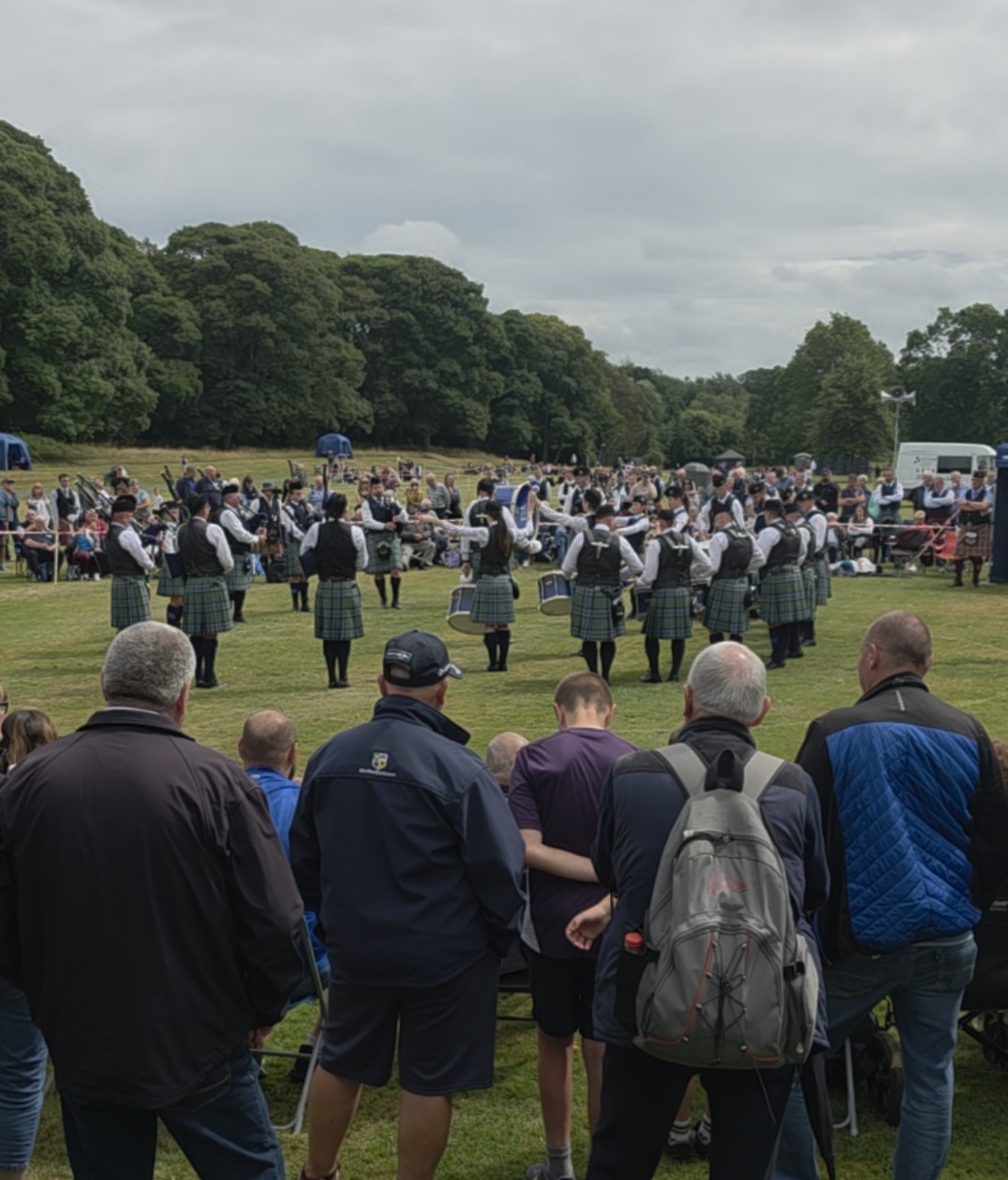
Not many people know that I have played in a pipe band for over 40 years.
When I started, I certainly wasn’t thinking about leadership, teamwork, culture or high performance. I was there to learn the drums, compete and hopefully win a few competitions along the way!
But looking back now, particularly through the lens of working in sport, I realise that being part of a pipe band has taught me a huge amount about what makes a good team.
A pipe band is actually a fascinating example of teamwork.
You have different people, different personalities and different skills. You have pipers and drummers doing completely different things. Yet when you step into the competition arena, somehow it all has to come together as one team and one performance.
There are lots of lessons in there for sport.
1. You have to be in unison, without everyone being the same
In a pipe band, the pipers need to play together. The drummers need to play together. And then the pipes and drums need to come together.
If one section is doing its own thing, it simply doesn’t work.
But that doesn’t mean everyone in the band is the same. Far from it!
You have different characters, personalities, strengths and talents. That’s actually what makes a team interesting.
The lesson for a sports organisation?
Don’t create robots.
Good teams need different types of people with different skills and personalities. The important thing is that everyone understands how their individual contribution fits into the overall team.
And they need to enjoy being together.
You can have all the talent in the world, but if people don’t enjoy being around each other, eventually it will show.
2. Someone has to lead
Every band needs leadership.
The Pipe Major leads the pipe corps and determines the tunes, musical direction and standards. The Leading Drummer has a similar responsibility within the drum corps. They set expectations and help drive the tempo and performance.
Sport is no different.
Good teams need clarity around leadership.
Someone has to set the direction, make decisions, establish standards and bring people with them.
But good leadership isn’t about doing everything yourself. The best leaders surround themselves with talented people and give them responsibility.
The leader sets the direction but the whole team delivers the performance.
3. Repetition matters
Learn a tune. Then practice it again. And again. And probably again!
Sometimes you work on what seems like the smallest detail because you know it can make the difference when you eventually compete.
There are very few shortcuts.
Sport is exactly the same.
Whether you are coaching a team, running a club or managing a sports organisation, getting the basics right repeatedly matters.
Keep practising. Keep reviewing. Keep correcting.
High performance is often less about one brilliant idea and more about doing lots of small things consistently well.
4. Find your rhythm
There are moments when a pipe band plays and everything just clicks.
The pipes are together. The drums are together. The tempo feels right. You are almost in a groove. It can feel like an orchestra with everyone contributing something different but producing one sound.
Great sports teams have that as well.
Players start anticipating what teammates are going to do. Communication becomes almost instinctive. Everyone understands their role.
You can’t manufacture that overnight.
It comes from spending time together, practising together and building trust.
Eventually, the team finds its rhythm.
5. Help the person who is struggling
Every team has stronger and weaker performers.
A band is no different.
But one person struggling can affect the overall performance, so you can’t simply ignore them. You coach them. You spend time with them. You help them improve.
And ideally, you start teaching people correctly from a young age so that good habits become normal.
There is a big lesson here for sport.
Development takes time.
Rather than constantly looking to replace people who have potential, sometimes the better answer is to invest in them.
Good coaching and mentoring can transform someone’s contribution to a team.
6. Celebrate together but don’t let winning become everything
I have been fortunate enough to experience some fantastic successes with pipe bands over the years.
And winning is brilliant!
You practise for competitions because you want to perform well and hopefully win.
When you do, celebrate it together. But you aren’t going to win every time.
Some of my best memories aren’t necessarily about trophies. They are about trips, friendships, special memories and experiences with people I have known for years.
Sport sometimes needs to remember that.
Winning is nice, but it isn’t the only thing that matters.
Enjoy the journey. Celebrate progress. Create memories.
Those memories last much longer than the result.
7. Culture beats talent if you have the wrong people
Pipe bands need characters.
Actually, I think every good team needs characters!
You don’t want everyone behaving and thinking exactly the same way.
But there is a difference between having characters and having people who negatively affect everyone around them.
That is where culture becomes so important.
Get good people into your organisation. People with the same or similar values.
People who care about others. People who want the team to succeed. People who contribute positively.
Talent is important, but talent without the right attitude can quickly damage a team.
Sometimes protecting the culture is more important than protecting an individual’s place in the team.
8. Dedication is non-negotiable
Being in a competitive pipe band requires a serious commitment.
Practices. Competitions. Travel. Personal practice. Weekends away.
And remember, for most people this is a hobby!
People do it because they love it and because they don’t want to let their teammates down.
That sense of commitment is incredibly powerful.
Sport needs the same mentality.
You can’t expect high standards without commitment.
Whether you are a player, coach, volunteer, board member or member of staff, being part of a team means turning up and doing your bit.
You don’t have to be the most talented person in the room.
But your teammates should be able to rely on you.
9. Look after your tools
Finally, something very practical.
A piper needs to look after their pipes. A drummer needs to look after their drums.
If your instrument isn’t properly maintained, you can’t expect it to perform at its best when it matters.
There is another sporting lesson here.
Look after the tools that allow you to perform.
That might mean looking after the equipment, facilities, technology, data or even the processes your organisation uses every day.
More than music
When I think back over more than 40 years in pipe bands, I realise that I learned far more than how to play an instrument.
I learned about discipline. I learned about standards. I learned about leadership. I learned about winning and losing. I learned about working in a team with people who have different personalities.
Most importantly, I learned what it means to be part of a team.
A great pipe band isn’t necessarily a collection of the best individual pipers and drummers.
It’s a group of people who understand their roles, practise relentlessly, trust each other, enjoy being together and somehow produce something that is better than the sum of the individual parts.
And isn’t that ultimately what we are trying to create in sport?
Different talents. Different personalities. Different roles. One rhythm. One team.
About Geoff Wilson
Geoff runs his own consultancy business, with a focus primarily on sport. Previously Head of Marketing and Communications at the Irish FA, Geoff now consults to a wide range of global sports organisations on areas such as strategic planning, marketing and communications, digital, fan engagement, public affairs, women’s football, league development, club development and knowledge sharing / capacity building programmes. Geoff has created numerous academic models for the sports industry. Geoff is on the Advisory Panel at the English Football League and Chair of the Sports Council Trust Company (Sport England organisation).
Geoff has written a book which focuses on ‘developing grassroots sports clubs’ to order a copy check out https://www.routledge.com/Leading-a-Grassroots-Sports-Club-A-Practical-Guide-to-Managing-and-Developing-Your-Club/Wilson/p/book/9781041094883?srsltid=AfmBOooMPgFpXYSGYwNBOLxrR6mYShU8mWeM_rbVCGlipdpjnsfqlqVD
1. Check out Geoff’s online course in strategic planning at https://geoffwilson.teachable.com/
2. The other sports models created or co created by Geoff can be found below:
- Fan engagement https://geoffwnjwilson.com/2016/08/25/254/
- Fans Journey Model https://geoffwnjwilson.com/2023/04/06/the-fan-journey-model/
- Club Development framework model https://geoffwnjwilson.com/2024/01/30/club-development-framework-model-for-the-sports-industry/
- Growing attendance https://geoffwnjwilson.com/2019/09/18/growing-attendance-model-gam/
- Data maturity on sport https://geoffwnjwilson.com/2021/05/29/61-of-all-sports-organisations-do-not-use-data-for-their-overall-strategy/
- Sports Community Engagement Model https://geoffwnjwilson.com/2024/08/22/sports-community-engagement-model/

