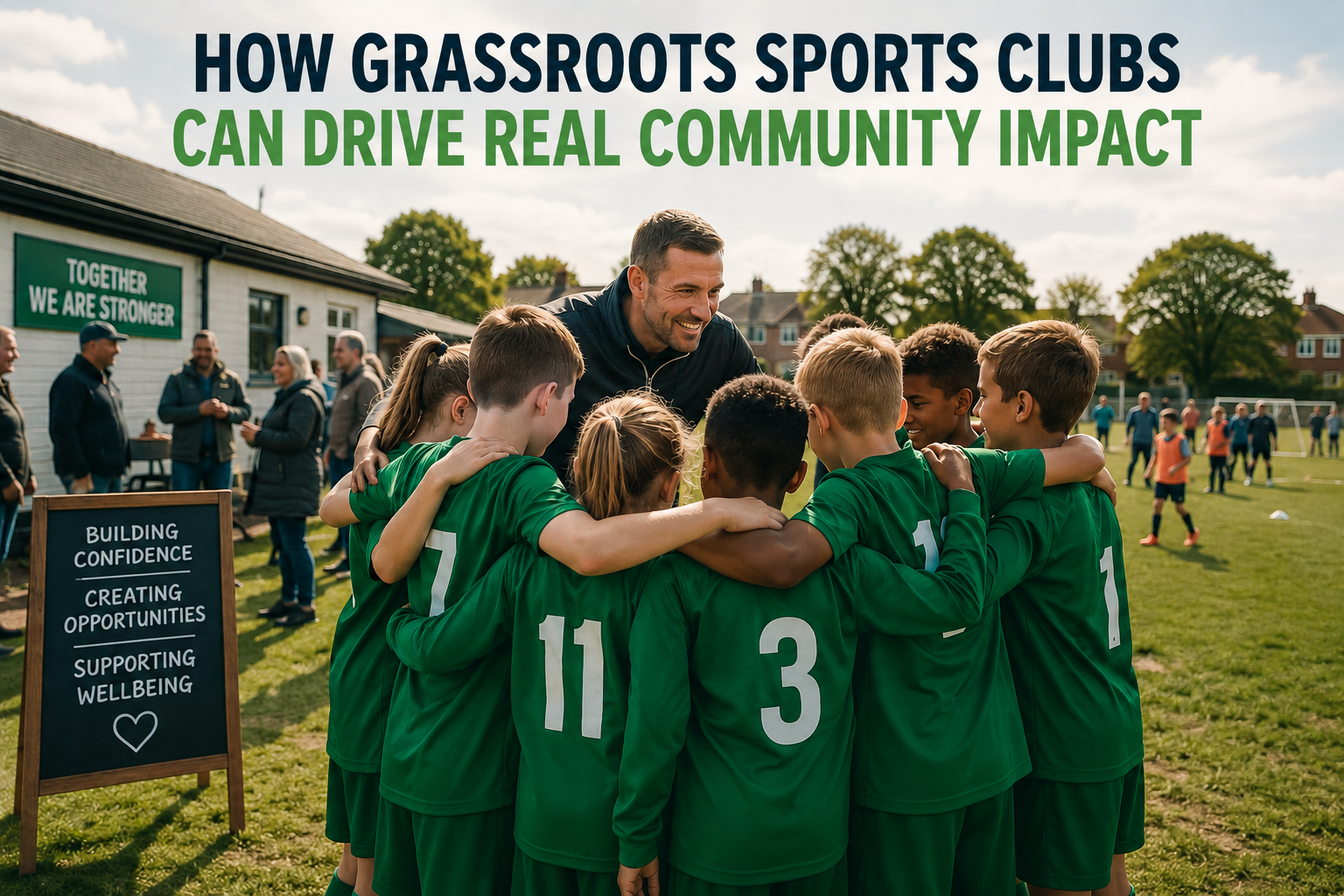
Grassroots sports clubs are far more than places where people gather to kick a ball, shoot a hoop, or swing a racket. They are cornerstones of community life, bringing people together, developing talent and sparking social and economic progress in towns and villages across the country.
Grassroots sports clubs contribute millions of volunteer hours annually, improve physical and mental wellbeing, create social connections and generate economic activity within local communities. Clubs that actively engage beyond the playing field often attract more participants, volunteers, sponsors and funding opportunities.
To understand how clubs can deepen their connection with the local community and why it matters so much, here are some thoughts to consider for your sports club.
- Community Is the Heartbeat of Grassroots Sport
A sports club is its community:
- Players, coaches, referees, sponsors, volunteers and spectators come from the community
- The club gives people a place to belong and connect
- It’s a two-way street: the club gives back just as much as it receives
- Social and Economic Benefits of Community Connection
Socially a sports club can:
- Build friendships across different ages and backgrounds
- Boost confidence and communication skills
- Develop character through teamwork and resilience
- Encourage positive relationships beyond the pitch or court
Economically:
- Local sponsors help pay for:
- Kits
- Facilities
- Coaching and training needs
- The running costs of the club
- Events, including games, draw in visitors and can help to boost:
- Club fundraising
- Local business revenue (cafes, shops, etc.)
- Grow participation
- Raise awareness of the club and sport
- Youth Participation and Retention
Local community engagement drives:
- Initial involvement: Parents are more likely to bring their kids if they feel connected and the values of the club are aligned
- Ongoing commitment: Players stay where they feel welcomed, safe and supported
Key elements:
- A positive club culture with shared values
- Friendships that grow both on and off the pitch
- A club atmosphere that feels like home
- Boosting Funding and Sponsorship Through Community
How community links attract sponsors:
- Local businesses want to give back to their community and be seen doing so
- Fundraising through:
- Raffles and prize donations
- Sponsored events
- Facility partnerships
- Clubs can return the favour by:
- Encouraging members to support those businesses
- Showcasing sponsors authentically on social platforms
- Reputation and Visibility
Why a good reputation matters:
- Parents want to trust the environment their children are in
- Players stay longer when they enjoy the experience
- Sponsors want to associate with high-quality, values-driven clubs
- Connecting with Schools and Youth Programmes
- Offer ‘after school’ taster sessions
- Invite school teams to use the club facilities
- Run joint fundraising events (school + club)
- Focus on delivering a brilliant first-time experience
- Leveraging Social Media and Digital Platforms
Use digital platforms to:
- Share updates, events and community stories
- Highlight volunteers, coaches and local partnerships
- Create a consistent identity (e.g. use #CommunityClub)
- Promote youth and school involvement
- Use short videos and member stories to showcase the club’s impact and attract participants, volunteers and sponsors.
Clubs should consider using a mixture of digital platforms such as:
- WhatsApp communities
- Monthly email newsletters
- Club podcasts
- Online booking systems for memberships and registering for club events.
- Partnering with Local Businesses
Three key ways businesses help:
- Financially: Sponsorships, donations, in-kind support
- Knowledge: Advice on marketing, finance, operations
- Networks: Referrals to suppliers, other sponsors
- Activating Volunteers and Parents
How to get parents and volunteers involved:
- Match people with roles that fit their skills and time
- Keep the time commitments for roles in the club small and manageable
- Show appreciation regularly (shoutouts, thank-you events)
A grassroots sport club should consider the following:
- Understanding Community Needs
- Clubs should regularly gather insight from local people through:
- Surveys
- Parent meetings
- Focus groups
- School engagement
- Discussions with local councils
- Community mapping exercises
Questions could include:
- What activities are missing locally?
- Are there barriers to participation?
- Which age groups are underserved?
- What facilities are needed?
- Examples of community programmes
There is no single model for community engagement. Clubs should develop programmes based on local needs, available resources and the facilities they have access to.
Examples of community programmes may include:
| Initiative | Community Impact |
| Walking football | Older adult wellbeing |
| Disability sessions | Inclusive participation |
| Holiday camps | Support working families |
| Food bank partnerships | Social support |
| Girls only sessions | Increased female participation |
| Mental health workshops | Wellbeing awareness |
| Multi sport festivals | Community cohesion |
- Measuring Community Impact
Clubs could monitor:
- Participation numbers
- Volunteer hours
- Female participation
- Retention rates
- Outcomes from school partnerships
- Sponsor income
- Social media reach
- Fundraising totals
- Community feedback
A simple annual impact report can be very powerful for funding applications and sponsor discussions.
- Creating a Community Plan
Clubs that achieve the greatest impact rarely leave community engagement to chance. They identify priorities, set objectives, assign responsibilities and review progress throughout the year.
A simple Community Engagement Plan template could include:
- Objectives
- Activities
- Partners
- Timeline
- Budget
- Success measures
Final Thoughts
The most successful grassroots clubs no longer see themselves solely as sports providers. They see themselves as community anchors that improve lives, strengthen local connections and create opportunities for people of all ages. By intentionally investing in community relationships, clubs can become indispensable assets within their towns and villages.
If you want to grow your club and make a real impact, start by asking:
- What does your community need?
- How can your club help?
- How can you show others what you’re doing?
- How can you attract the local community to your club and services offered?
With a clear plan, strong partnerships and consistent outreach, grassroots sports clubs can become some of the most valuable and trusted organisations within their communities.
About Geoff Wilson
Geoff runs his own consultancy business, with a focus primarily on sport. Previously Head of Marketing and Communications at the Irish FA, Geoff now consults to a wide range of global sports organisations on areas such as strategic planning, marketing and communications, digital, fan engagement, public affairs, women’s football, league development, club development and knowledge sharing / capacity building programmes. Geoff has created numerous academic models for the sports industry. Geoff is on the Advisory Panel at the English Football League and Chair of the Sports Council Trust Company (Sport England organisation).
Geoff has written a book which focuses on ‘developing grassroots sports clubs’ to order a copy check out https://www.routledge.com/Leading-a-Grassroots-Sports-Club-A-Practical-Guide-to-Managing-and-Developing-Your-Club/Wilson/p/book/9781041094883?srsltid=AfmBOooMPgFpXYSGYwNBOLxrR6mYShU8mWeM_rbVCGlipdpjnsfqlqVD
- Check out Geoff’s online course in strategic planning at https://geoffwilson.teachable.com/
- The other sports models created or co created by Geoff can be found below:
- Fan engagement https://geoffwnjwilson.com/2016/08/25/254/
- Fans Journey Model https://geoffwnjwilson.com/2023/04/06/the-fan-journey-model/
- Club Development framework model https://geoffwnjwilson.com/2024/01/30/club-development-framework-model-for-the-sports-industry/
- Growing attendance https://geoffwnjwilson.com/2019/09/18/growing-attendance-model-gam/
- Data maturity on sport https://geoffwnjwilson.com/2021/05/29/61-of-all-sports-organisations-do-not-use-data-for-their-overall-strategy/
- Sports Community Engagement Model https://geoffwnjwilson.com/2024/08/22/sports-community-engagement-model/

